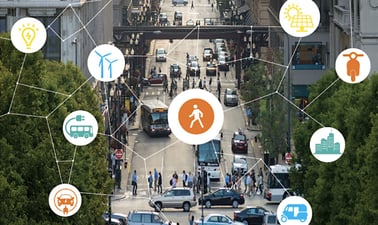
MITx: Transformative Living Labs in Urban Climate Action and Transportation Planning
This course is an introduction to sustainable and equitable solutions in urban mobility, and to the “living labs” model: a method of co-development among public and private actors, researchers, and civil society to accelerate innovation in climate action and sustainable urban planning and development.
Learning Journey Context
Works well as a continuation after mastering Energy & Earth Sciences fundamentals. It bridges the gap toward advanced, production-level engineering.
Relevant for professionals pursuing roles within Energy & Earth Sciences.
Quick Facts
What You’ll Learn
“Transformative Living Labs in Mobility” introduces living laboratory model of achieving sustainable urban mobility systems. The goal of the course is to explore the ways that multiple stakeholders and agencies organize and investigate living labs to find solutions for urban mobility.
Mobility planning plays a key role in building more sustainable cities and providing equitable access to economic opportunities, education, healthcare and social activities. The living lab concept can be a helpful tool to achieve these goals. This co-development process forms coalitions that enable transformative change, addresses climate change, and supports inclusive, sustainable urban development. Urban change makers can use the living labs approach to highlight the benefits of innovations and interventions and test the validity in collaboration with authorities, academia, civil society, private sector and end-users.
This course will bring all relevant aspects of living labs together into a coherent approach for testing innovative sustainable mobility solutions in urban living labs, and will highlight interlinkages and priorities in the planning and implementation process. It features projects currently implemented through Urban Pathways and SOLUTIONSplus, and was developed with support from UN Habitat.
This course is designed for learners in:
international organizations
local or national governments
consultancies
private industry and finance
incubators and start-ups
Especially important are audiences in developing countries, where urbanization and transportation infrastructure are rapidly developing and outdated, inequitable, and carbon-intensive approaches may be leapfrogged.
Outcomes
- The role of transportation and mobility planning in climate action plans aiming to reduce greenhouse gas emissions and mitigate climate change.
- Key principles and methodologies of living labs.
- How to develop and implement a living lab, including stakeholder engagement and coalition building.
- How to integrate the living labs model with policy making, planning, and private entities to drive urban mobility solutions globally.
FAQs
Top Alternatives
Highly-rated courses worth your attention